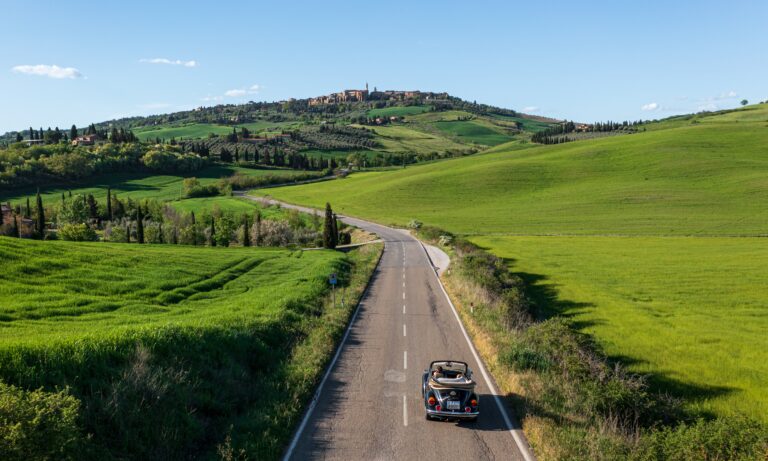
It is one of the most common questions travelers ask when planning a wine day in Tuscany: how many wineries can you visit in one day in Tuscany?
The tempting answer is: as many as possible.
The better answer is: fewer than you think.
And the honest answer (the one your future, slightly sun-kissed, well-fed, Sangiovese-loving self will thank you for) is usually two or three wineries in a full day, depending on where you are staying, which region you want to visit, and how much you actually want to enjoy the experience.
Because Tuscany is not a theme park with tasting rooms lined up next to each other. It is a real countryside, with hills, winding roads, small villages, family estates, working cellars, long lunches, gravel driveways, and the occasional tractor that moves at the spiritual pace of a Renaissance fresco.
In other words: Tuscany rewards good timing.
It does not reward panic.
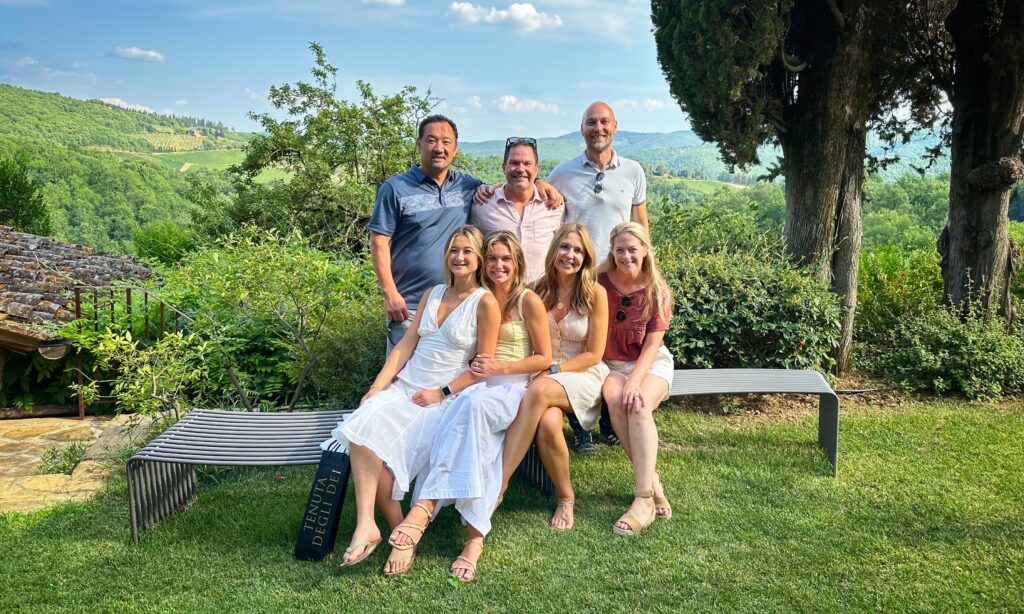
The Short Answer: Two or Three Wineries Is Usually the Sweet Spot
For most travelers, the ideal number of wineries in one day in Tuscany is:
- Two wineries if you want a relaxed, high-quality experience with lunch, scenery, and real conversation.
- Three wineries if the region is close, the distances are well planned, and the day is designed carefully.
- Four or five wineries if your goal is not to remember much.
That may sound blunt, but it is true. Visiting four or five wineries in one day can look impressive on paper. In reality, it often turns a beautiful wine day into a logistical workout with better glassware.
A proper winery visit is not just “arrive, drink, leave”.
At a good estate, you may walk through the vineyards, visit the cellar, learn about the family or producer, taste several wines, ask questions, maybe taste olive oil, maybe enjoy local food, maybe decide to buy a few bottles, maybe take a photo with the view because of course you will… you are in Tuscany, not in an airport lounge.
All of that takes time.
And it should.
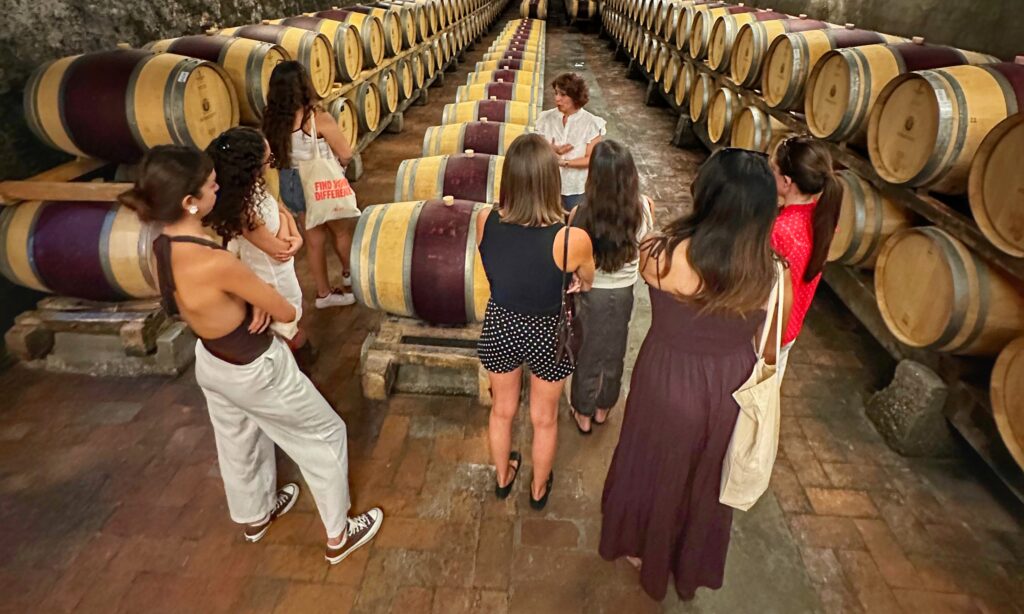
What Actually Happens During a Winery Visit?
A common mistake is imagining a winery visit as a quick tasting. In some parts of the world, that might be possible: walk into a tasting room, stand at a counter, try three pours, buy a bottle, and move on. Tuscany is often different, especially if you are visiting smaller family-run wineries.
A meaningful visit may include:
- arrival and welcome
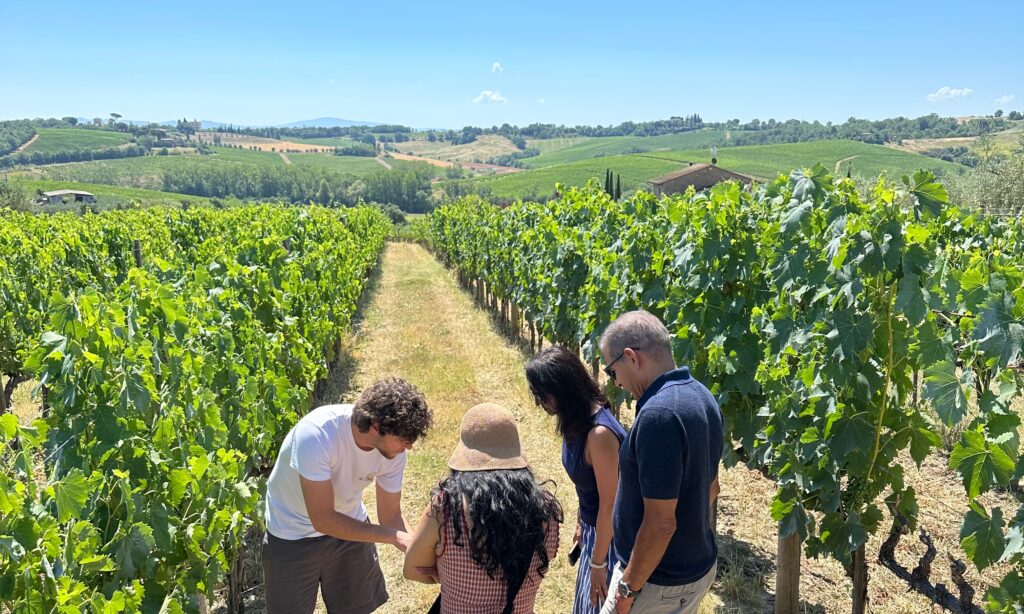
- vineyard walk
- explanation of the grape varieties
- cellar visit
- tasting of several wines
- olive oil or local food pairing
- conversation with the producer or guide
- time to enjoy the view
- time to buy or ship wine
Even when everything runs smoothly, a real visit usually needs at least 60 to 90 minutes. Some visits deserve more.
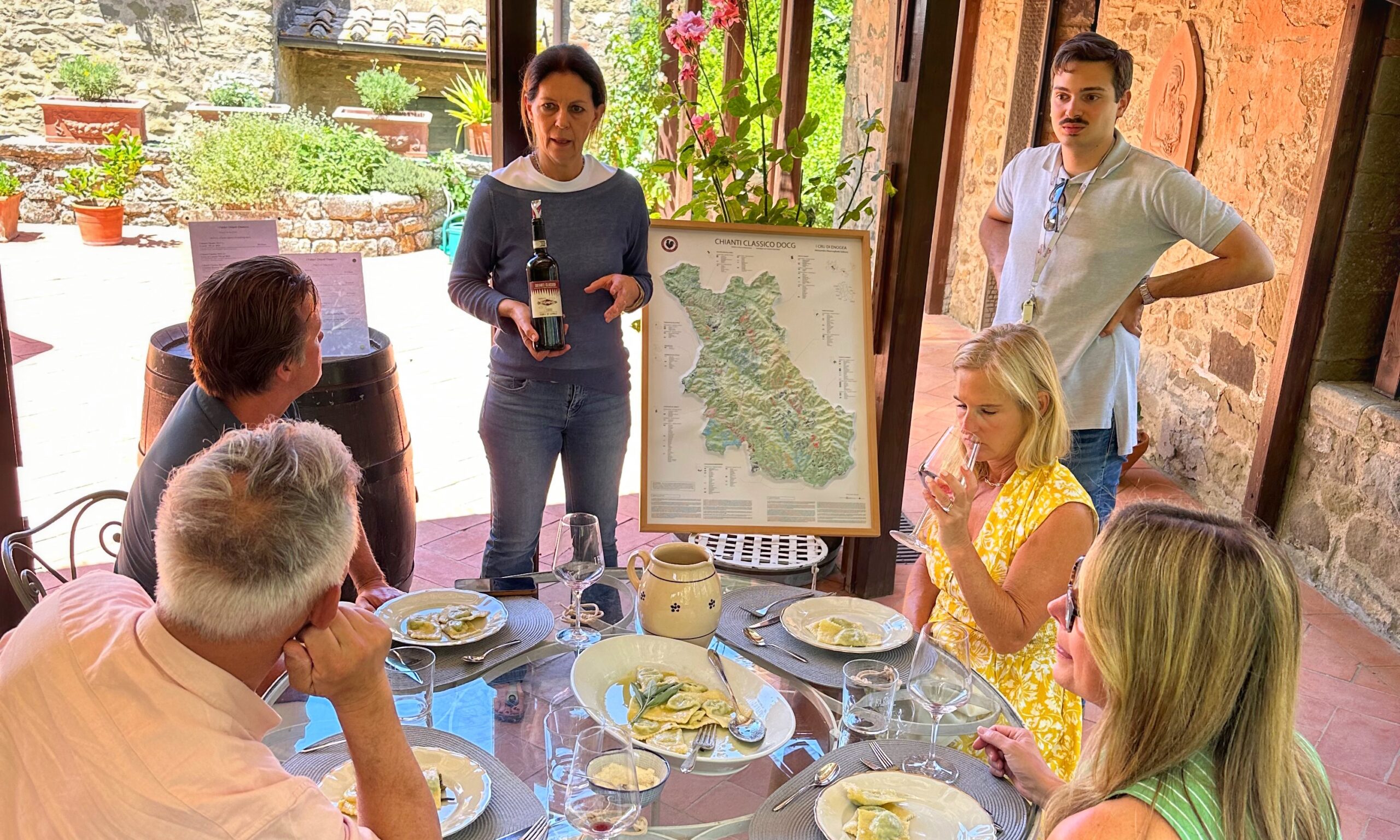
And if lunch is included, that is not a “quick bite”, at least at Tuscany Uncorked. A proper Tuscan lunch is part of the experience. It is where the wines make sense, where the conversation opens up, and where you realize that pecorino, ribollita, handmade pasta, grilled meats, extra virgin olive oil, bread, and Sangiovese have been quietly conspiring together for centuries.
You do not want to rush that.
The Hidden Time Nobody Counts: Getting There
When people plan a wine tour, they often count winery time.
They forget driving time.
That is the silent thief of badly planned itineraries.
From Florence, Chianti and Chianti Classico are relatively close, but even then, you are not teleporting from one postcard to another. You are driving through real roads, small towns, countryside traffic, curves, hills, and occasional roadworks that appear in Italy with the mystery of ancient ruins.
For closer wine regions, the first transfer may be around an hour. For places like Montalcino, Montepulciano, or Bolgheri, the transfer is much longer. That does not mean you should not go. It means you should build the day properly. A Montalcino wine day can be spectacular. But if you spend almost two hours getting there and almost two hours coming back, trying to squeeze in four wineries is not ambitious.
It is a cry for help.
In a farther region, two excellent visits and a thoughtful lunch can give you a far better understanding of the place than four rushed tastings. Lunch at a winery can be a clever choice.
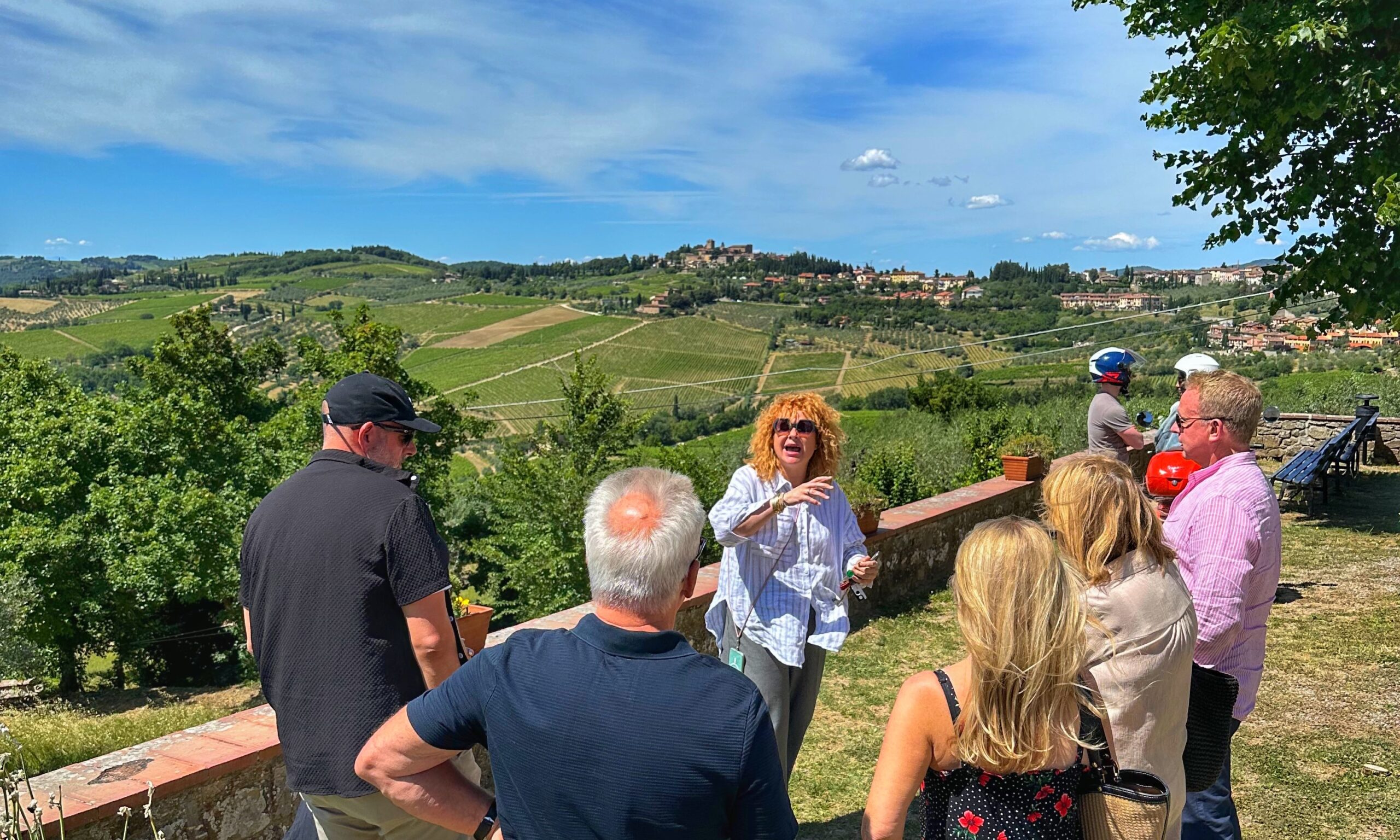
Why Four or Five Wineries Usually Does Not Make Sense?
There are three big problems with overloading a wine day:
1. The Visits Start to Blur
At the first winery, everyone is fresh. The vineyard is beautiful. The barrels are romantic. The guide explains fermentation and you think, “This is fascinating”. By the fourth winery, someone is quietly wondering where they left their sunglasses, someone else is nodding at a cellar explanation they no longer hear, and the words “Sangiovese”, “oak”, and “soil” begin to float around like background music in a restaurant.
More is not always more. Sometimes more is just less attention.
2. Your Palate Gets Tired
Wine tasting is fun, but it is also sensory work. Acidity, tannin, alcohol, oak, fruit, earth, spice, texture… your palate is collecting information. After too many wines, especially structured reds like Chianti Classico, Brunello di Montalcino, Vino Nobile di Montepulciano, or Super Tuscans, your senses begin to wave a little white flag.
At some point, every wine becomes “nice”. That is not a wine description. That is palate fatigue wearing a linen shirt.
3. The Day Becomes About Quantity, Not Memory
The best winery visits are not always the ones with the longest wine list. They are the ones where something happens:
- A producer explains why one vineyard behaves differently from another.
- Someone opens an older vintage.
- You taste the same grape from two different soils.
- Lunch lasts longer than expected because the conversation is too good.
- You walk outside and the view suddenly explains the wine better than any technical sheet could.
These are the moments people remember. They need space.
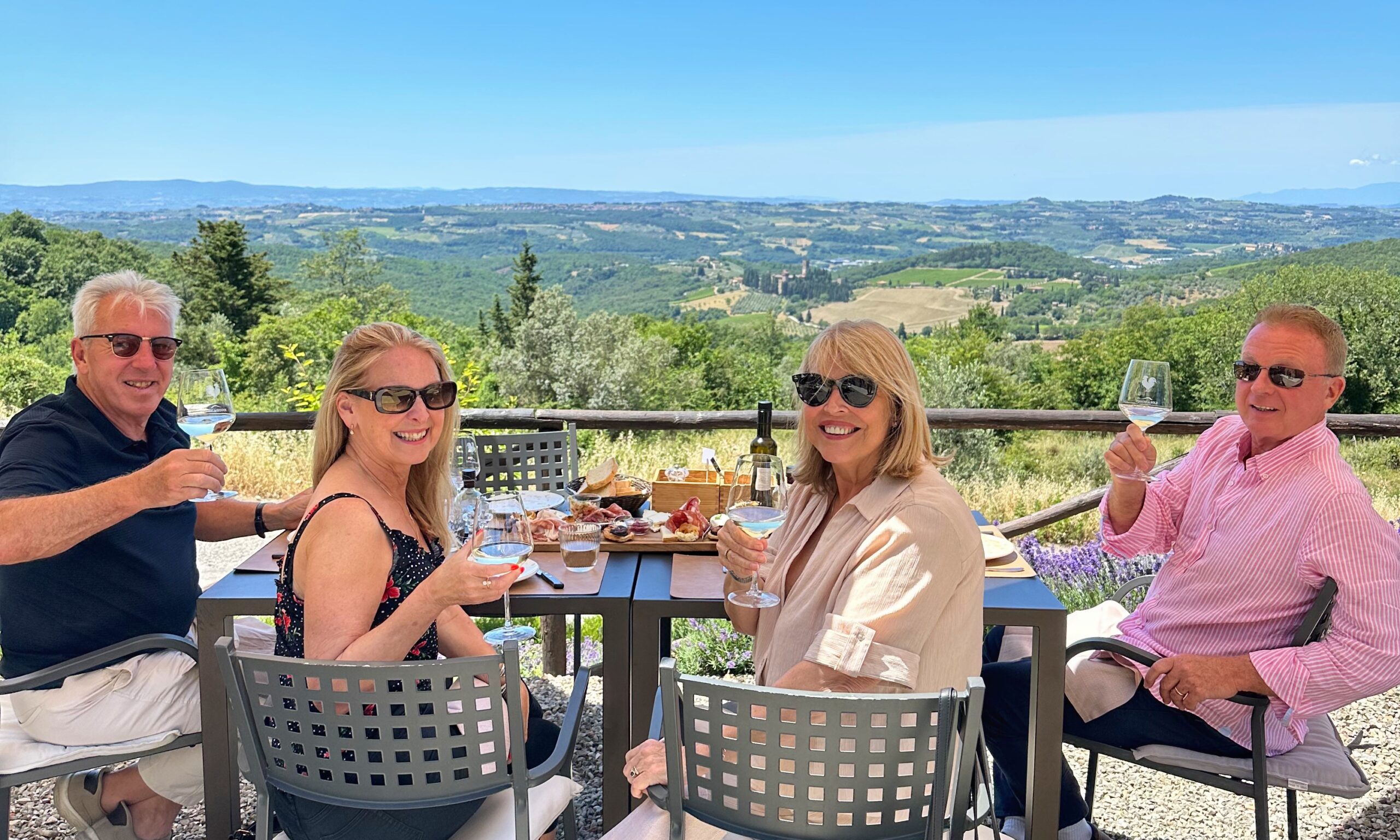
The Best Number Depends on the Region
There is no single perfect number for every Tuscan wine day. The right answer depends on geography:
Chianti Classico
Chianti Classico is one of the most flexible regions for a day trip, especially from Florence. A well-planned day can include two or three wineries, depending on lunch and driving distances between estates. Three can work if the wineries are chosen carefully and each visit has a different purpose: perhaps one small organic producer, one historic estate, and one lunch-focused stop with a view.
The key is not repeating the same experience three times.
You do not need three identical cellar tours. You need three different windows into the region.
Montalcino
Montalcino is farther and more committed. For Brunello country, the best rhythm is often two wineries and lunch, or possibly three if the day starts early and the visits are designed with precision. The magic of Montalcino is not just tasting Brunello. It is understanding how one hill can produce different expressions depending on altitude, exposure, soil, and producer style.
That takes time. If you rush Montalcino, you may drink famous wine without really understanding why it is famous.
Montepulciano
Montepulciano can be beautiful, but from Florence it requires a realistic plan. Two wineries and time in the town can make more sense than three winery visits with no breathing room. The town itself is part of the experience: Renaissance palaces, underground cellars, steep streets, and views that make you forgive your legs for working hard.
San Gimignano
San Gimignano works well when you want wine, scenery, and a medieval village in the same day. Here, two wineries plus time in town can be ideal… especially if you want to explore Vernaccia di San Gimignano, one of Tuscany’s most historic white wines, while still having time for lunch and a proper stroll.
And yes, gelato may become part of the itinerary. For cultural reasons, obviously.
Bolgheri
Bolgheri is a longer day from Florence and deserves a slower rhythm. This is not the place to race from estate to estate collecting labels. The region is about coastal light, cypress avenues, Super Tuscan history, Bordeaux varieties, Mediterranean influence, and some of Italy’s most prestigious wines.
Two carefully chosen visits can be far more powerful than four rushed ones.
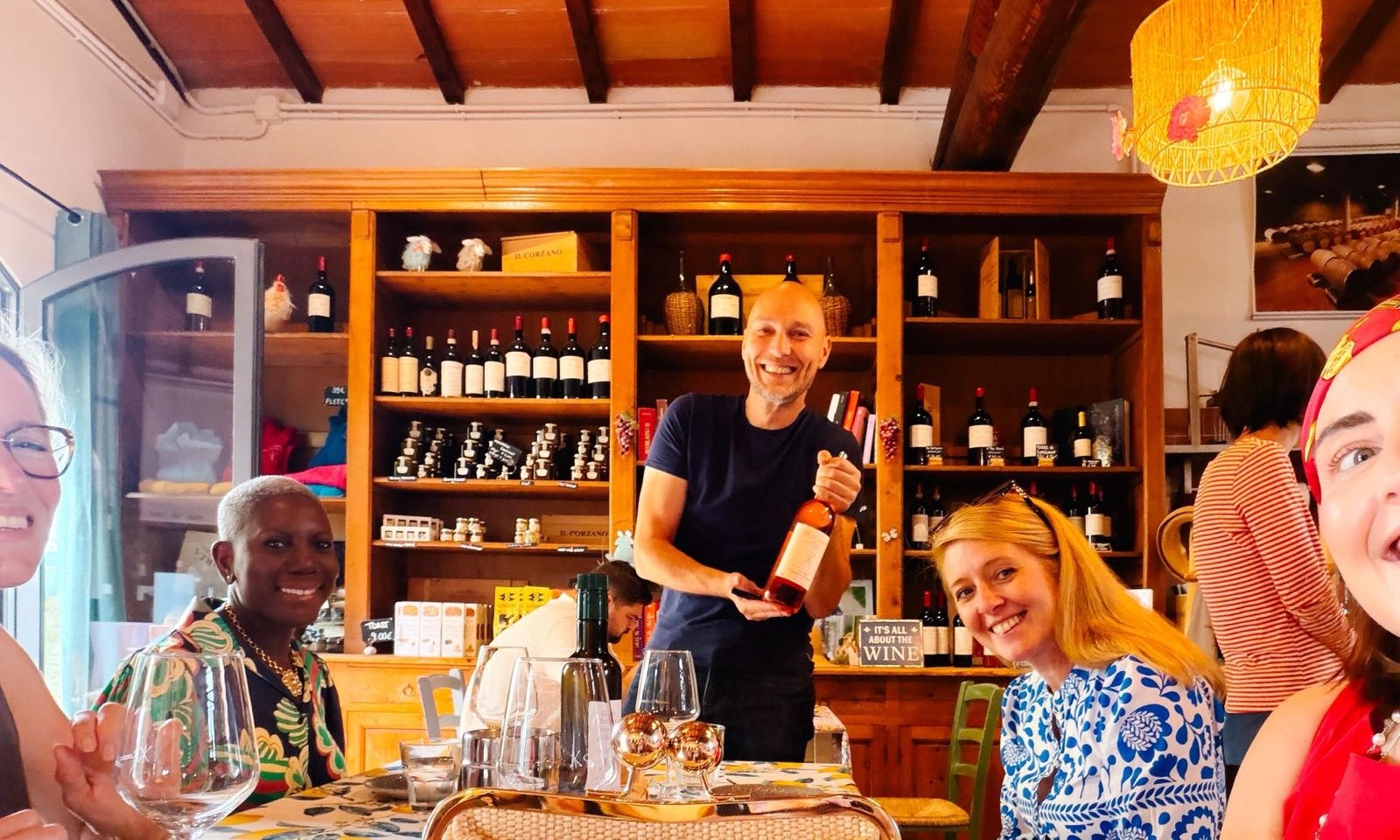
How Long Is a Wine Tour in Tuscany?
A proper full-day wine tour in Tuscany usually lasts seven to eight hours if you are staying relatively close to the wine region. For farther areas, it can become eight to nine hours or more.
A half-day wine tour can work, but it should be treated honestly. It usually means one or two close stops, not a miniature version of a full-day itinerary.
Trying to compress a full Tuscan wine day into four hours is like trying to summarize Italian cuisine with a breadstick. Technically possible, emotionally questionable.
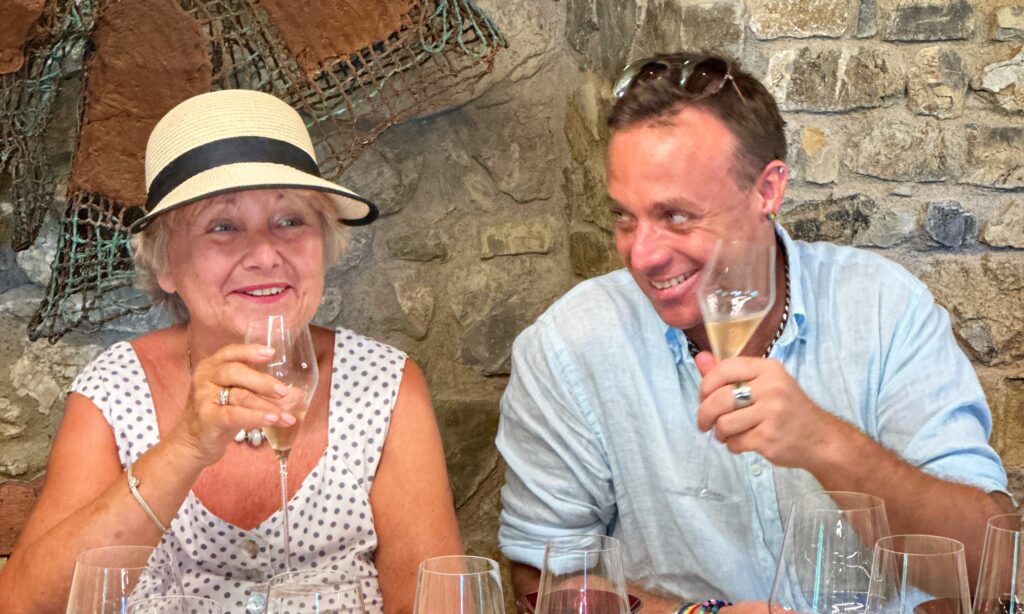
What About Lunch?
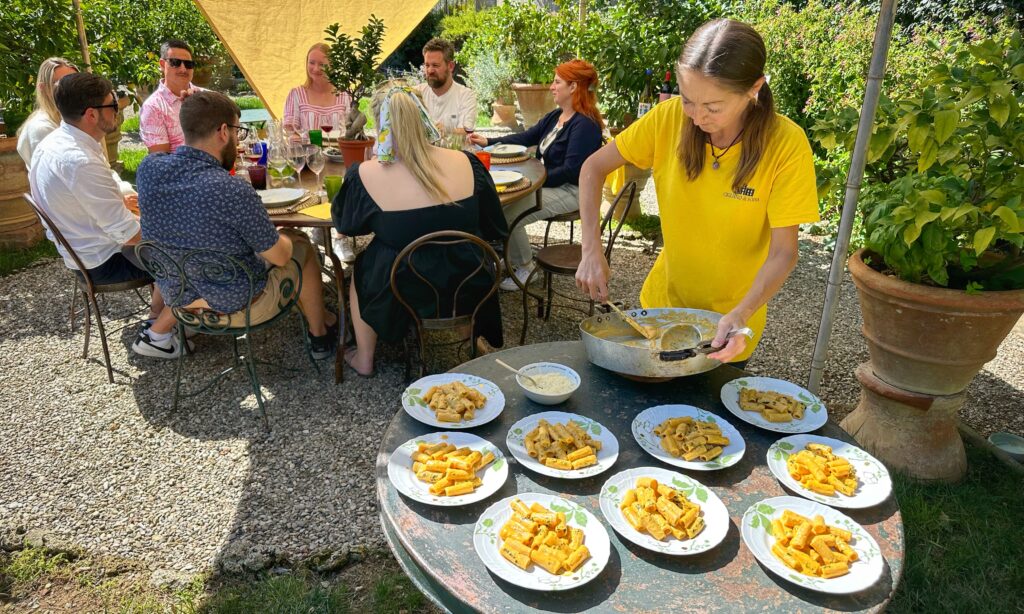
Lunch changes everything, in the best possible way. A wine day without lunch can feel more tasting-focused. A wine day with lunch becomes more complete, more relaxed, and often more memorable.
But lunch needs time.
Not just eating time… arrival time, seating time, pairing time, conversation time, “let me just take one more picture of this view” time.
If you include lunch, be realistic. Two wineries plus lunch can feel full and satisfying. Three wineries plus lunch can work if the logistics are excellent. Four wineries plus lunch is usually where joy goes to be scheduled into fifteen-minute blocks.
The Common Mistake: Planning by Number Instead of Purpose
The question should not be: “How many wineries can we fit in?” It should be: “What do we want this day to feel like?”
- Do you want to understand Chianti Classico in depth?
- Do you want to compare small producers and historic estates?
- Do you want a relaxed lunch with vineyard views?
- Do you want to meet winemakers?
- Do you want to taste famous labels?
- Do you want beautiful scenery, education, and food in balance?
Once you know the purpose, the number of wineries becomes much easier. A great wine day is not built by adding stops, it is built by choosing the right ones.
The Ideal Rhythm for a Tuscan Wine Day
A well-designed day might look like this:
- Morning departure from Florence or your villa.
- Scenic drive into the countryside.
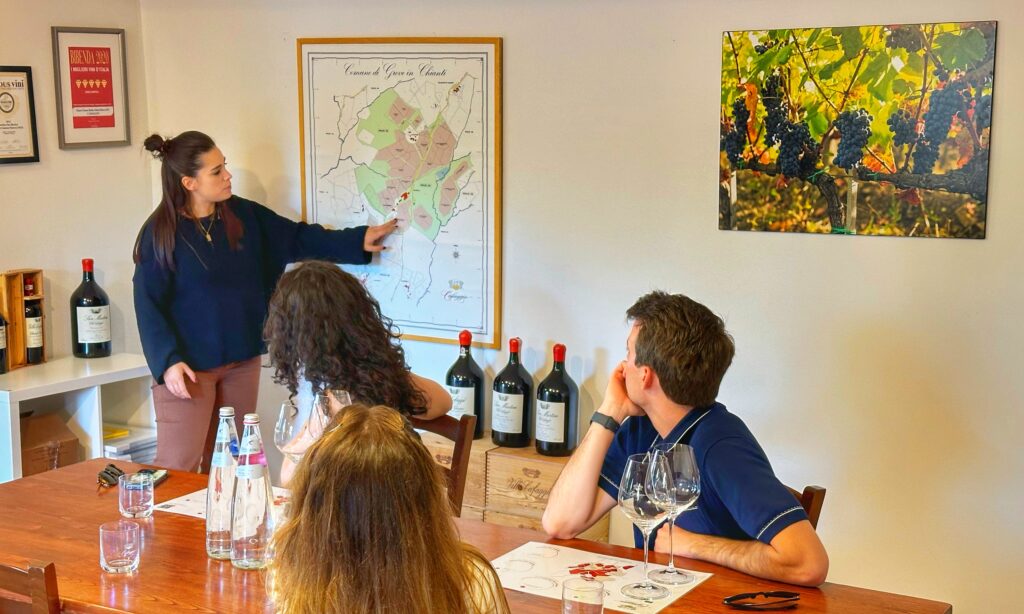
- First winery visit with vineyard and cellar.
- Tasting with context.
- Second winery with a different style or story.
- Lunch with local food and wine.
- Optional third stop, if the region and timing make sense.
- Return without feeling like you have been chased by a calendar.
That is the rhythm that works.
You have enough structure to feel cared for, but enough space to enjoy the things that cannot be perfectly scheduled: a good question, a beautiful view, a longer conversation, a producer who decides to pour something special.
So, How Many Wineries Should You Visit in One Day?
For most travelers, here is the practical answer:
- One winery is enough for a half-day or a very relaxed experience.
- Two wineries is ideal for a high-quality full day with lunch, especially in farther regions.
- Three wineries can be excellent in closer regions, if carefully planned.
- Four or five wineries is usually too much if you care about quality, comfort, and actually remembering what you tasted.
This is wine country, not a scavenger hunt.
Our Advice: Leave Room for the Day to Become Special
At Tuscany Uncorked by Wine School Italia, we design wine tours around rhythm, not just geography. That means thinking carefully about distances, winery style, lunch, timing, personality, and the kind of experience our guests actually want.
Sometimes the best day includes three wineries.
Sometimes two is perfect.
Sometimes the most memorable part of the day happens between the official stops: a vineyard walk, a conversation with a producer, a view over the hills, or the moment when the wine in the glass finally connects with the landscape in front of you.
- That is why we do not believe in rushing Tuscany.
- Tuscany has spent centuries becoming Tuscany.
- It deserves at least a proper lunch.
FAQ
How many wineries can you visit in one day in Tuscany?
Most travelers should plan for two or three wineries in a full day. Two is usually best for a relaxed experience with lunch, while three can work in closer regions such as Chianti Classico if the itinerary is carefully planned.
Are four wineries in one day too many?
Usually, yes. Four wineries often mean rushed visits, tired palates, and less time for lunch, scenery, and conversation. It may sound efficient, but it rarely creates the best experience.
How long is a wine tour in Tuscany?
A proper full-day wine tour usually takes seven to eight hours, depending on the region. Farther destinations such as Montalcino or Bolgheri may require eight to nine hours or more.
Is a half-day wine tour in Tuscany worth it?
Yes, if expectations are realistic. A half-day tour works best with one or two nearby stops. It is not ideal for distant regions or a packed itinerary.
What is better: two or three wineries?
Two wineries are usually better if you want a slower, deeper, more relaxed day with lunch. Three wineries can be excellent if each stop offers something different and the driving distances are short.
Stay in Touch
📲 Follow us on Instagram and Facebook for more wine adventures, travel tips, and exclusive experiences!
See you in Tuscany! 🍷