Let’s be honest: “How much does a wine tour in Tuscany cost?” is one of those travel questions that should have a clear answer and yet most results online fall into two unhelpful categories:
- vague (“it depends”)
- a list of prices with no explanation (which makes comparing options almost impossible)
So here’s a better approach: instead of a price list, this guide explains what actually drives the cost of Tuscany wine tours, what changes the experience (and what doesn’t), and how to choose the right level for your trip, especially if you’re planning a wine tour from Florence and you only have one day to get it right.
Because in Tuscany, the difference between a “nice day” and a “highlight of the trip” is rarely the headline price. It’s the design of the day.
Table of Contents
Typical Tuscany wine tour price ranges
(the practical baseline)
Prices vary by region, season, and what’s included. But most tours fall into these buckets:
1) Shared group wine tours (fixed itinerary)
€50 to €100 per person
Often the lowest price point. You’re buying a seat on a pre-set route with a pre-set pace. Quality varies a lot and groups are big, up to 50.
2) Premium small group tours (curated, limited guests)
€200 to €350 per person
Still shared, but usually fewer people, better pacing, and more thoughtful winery choices. Often the best value for travelers who want quality without a fully private day.
3) Private wine tours (custom pacing + custom logic)
€300 to €600+ per person
Built around your trip rather than a template. Higher cost, but also the biggest swing in value depending on who curates it and how it’s structured.
4) Ultra-premium / collector-style private days (access + rarity)
€600 to €1200+ per person
Rare access, benchmark estates, older vintages, premium tastings, or long-distance regions. Less common, but real.
Key point: “Wine tour” isn’t one product. It’s a category, and the price range reflects wildly different experiences.
What changes the price (and what doesn’t)
Here are the core variables that actually move the needle. If you understand these, you’ll compare tours like a pro.
1) Group vs private: you’re paying for control of the day
A group tour is like buying a seat on a route. A private tour is like commissioning a day.
Group wine tours usually mean:
- set pickup and return times
- fixed wineries
- fixed pace
- a group dynamic you don’t control
Private wine tours usually mean:
- itinerary designed around your trip (where you’re staying, your timing, your pace)
- flexibility to match wineries to your tastes
- the ability to include non-wine moments (food culture, scenic stops, town time) without stress
That flexibility is a big part of what people mean when they say “premium” and it’s one of the biggest reasons private experiences cost more.
2) Driver vs host vs wine expert: the guide factor
This is the most misunderstood pricing variable in Tuscany wine tourism.
Many tours are essentially transport + winery bookings. That can be perfectly enjoyable. But it’s not the same thing as a guided wine experience.
Here’s the range you’ll see:
Driver-only (logistics-focused)
You get from A to B. Winery staff provides most explanations. Good if you just want an easy day and you don’t care about deeper context.
Host/escort (schedule + light storytelling)
You’re looked after, timing is managed, the day feels smoother. Wine depth can still be surface-level.
Wine educator (interpretation + structure)
This is where the day changes category. A true wine educator connects: Landscape, vineyard decisions, cellar choices, what you taste, according to what you like.
If you want to come home saying, “Now I understand why these wines taste like this”, the guide factor is not a luxury, it’s real value. (If this sounds like what you want to see how this looks like in practice, check here how we design wine tours in Tuscany)
3) Region choice: distance + identity + scarcity
Tuscany is not one wine region. It’s a map of distinct identities, and distance from Florence affects both cost and experience.
From Florence, these dynamics are common:
Chianti / Chianti Classico
Often the best value from Florence: shorter driving times, more time at wineries, and a naturally relaxed pace.
San Gimignano area
Great for blending wine with town atmosphere and white-wine culture (Vernaccia), often with efficient routing.
Montalcino (Brunello)
Typically a higher-demand day with longer transfers. Worth it when it’s built around contrast, tasting how Brunello changes across zones.
Montepulciano (Vino Nobile + Val d’Orcia mood)
Distance-sensitive, ideal when you want a slower, scenic rhythm (but not a late start).
Bolgheri (coastal prestige)
Often one of the most expensive day trips from Florence due to distance and demand, best if you truly want that coastal “Super Tuscan” identity.
Rule of thumb: the farther you go, the more you want the day to be curated, because time is the most expensive hidden cost.
4) Winery type: access is what you’re paying for
Not all wineries deliver the same kind of visit, even if they pour the same number of wines.
The type of estate changes pricing because it changes:
- how much time and attention you receive
- whether you get vineyard/cellar context or just a tasting counter
- who hosts you (staff vs family vs winemaker)
- what you taste (entry lineup vs single-vineyard focus vs premium labes)
Common “types” you’ll encounter:
- High-volume hospitality wineries: polished, efficient, sometimes spectacular, sometimes a bit touristic
- Family-run working estates: often the most authentic and personal
- Boutique “hidden gems”: limited capacity, often appointment-only, high authenticity payoff
- Trophy access / highly allocated estates: costly, often worth it only when curated intelligently
The more limited and personal the access, the higher the operational cost, and often the higher the price.
5) Number of stops: two is often better than three
More wineries does not automatically mean better value. In Tuscany, pacing is the luxury.
A high-quality day usually follows one of these rhythms:
- Two stops (often ideal): one estate + one estate with lunch
- Three stops (only when distances are short): best in Chianti/Chianti Classico with disciplined timing
If a tour is cheap and promises three wineries and involves long transfers, do not expect depth or quality.
Seasonal pricing: it’s not just weather
Two high-demand windows typically affect pricing and availability:
- late spring (May–June)
- early fall / harvest (September–October)
Demand rises, wineries book out earlier, and premium slots become scarce.
But off-season doesn’t mean “worse.” Winter and shoulder months often deliver:
- more relaxed visits
- quieter countryside
- stronger producer interaction
- better “we’re not rushing” energy
A well-designed tour is beautiful year-round; your goal is to match the day to the season. Have a look at our blog “what is the best month to visit Tuscany?”
Hidden costs travelers often miss
Two offers can look similar until you examine what’s actually included.
Winery tasting fees
Some tours include all fees; others ask you to pay at the wineries. Neither is inherently wrong—just confirm it.
Lunch quality
“Included lunch” might mean snacks, a light bite, or a full multi-course farm-to-table meal. That’s a huge difference in experience.
Meeting logistics in Florence
ZTL and pickup rules matter. A well-run operator makes this easy and clear.
Time lost in transfers
If you spend hours in transit, the day can feel expensive even at a “good” price. Always ask how much time is driving vs tasting.
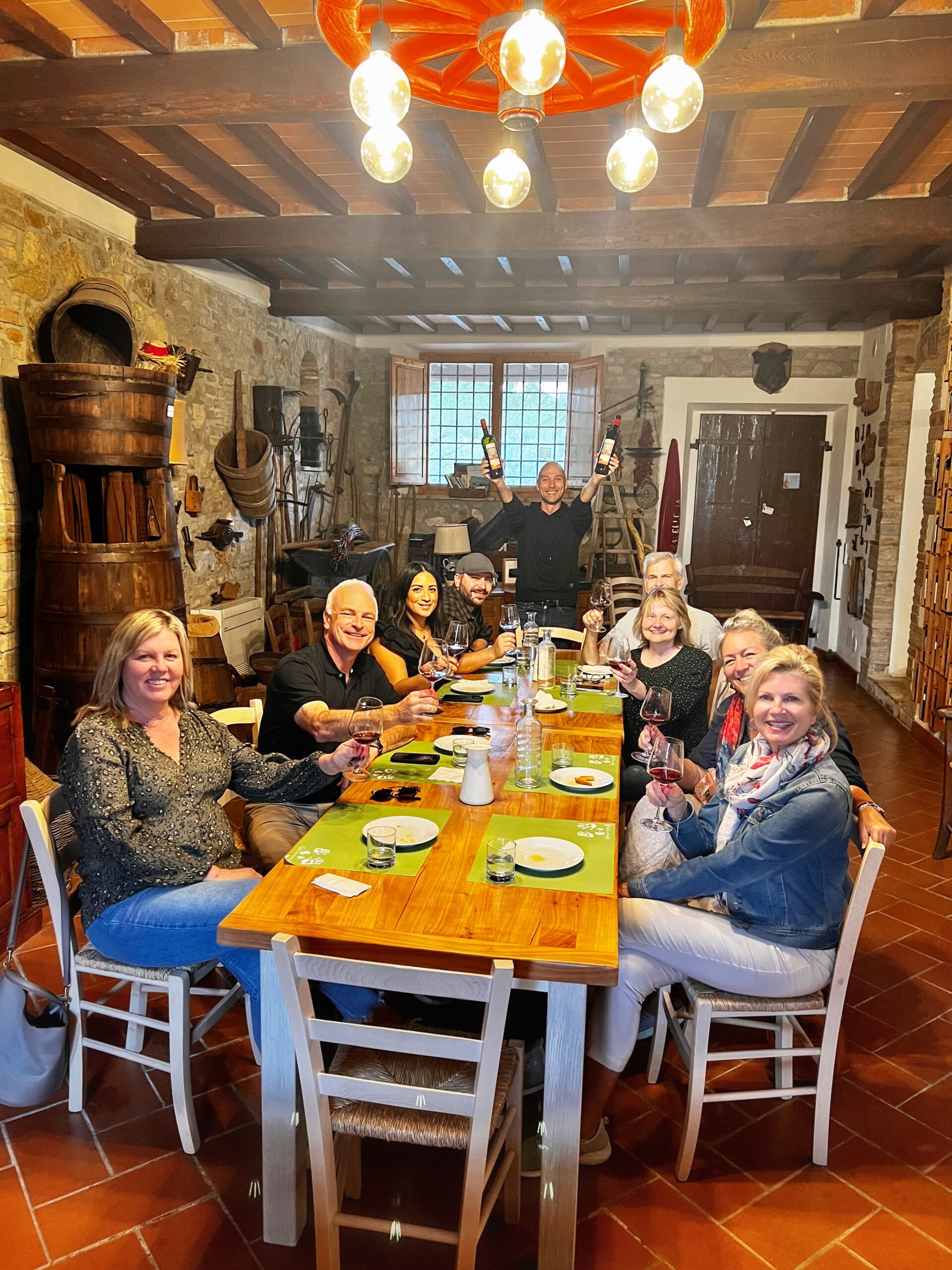
Cost vs Value: which Tuscany wine tour fits your trip?
Instead of comparing tours line-by-line, match the experience to your travel style.
1) The Couple (one day from Florence, first Tuscany trip)
Best value drivers: short transfers, an unrushed lunch, and a guide who can connect the dots without turning it into a lecture.
What changes cost/value: private vs small group, and how curated the wineries are (authentic access vs high-volume hospitality).
What to prioritize: pace. Tuscany feels premium when the day breathes.
2) The Family / Mixed Group (not everyone drinks much)
Best value drivers: layered engagement, food culture, scenery, authentic places; so everyone feels included, not “dragged along.”
What changes cost/value: private format often helps most here, plus lunch style and the level of hosting.
What to prioritize: inclusion + rhythm. The day should feel shared, not split.
3) The Wine Enthusiasts (they want more than “four pours”)
Best value drivers: comparative tastings, terroir context, and an expert guide who can translate vineyard choices into what you taste.
What changes cost/value: region (Montalcino/Bolgheri can run higher), access level, and tasting depth.
What to prioritize: logic. Great tours feel like a progression, not random stops.
4) The Honeymoon / Celebration (memory-first)
Best value drivers: privacy, atmosphere, time for photos, and a setting that feels cinematic without being staged.
What changes cost/value: seasonal demand, premium lunch setting, and the ability to slow the day down.
What to prioritize: emotion + ease. Effortless usually means well-designed..
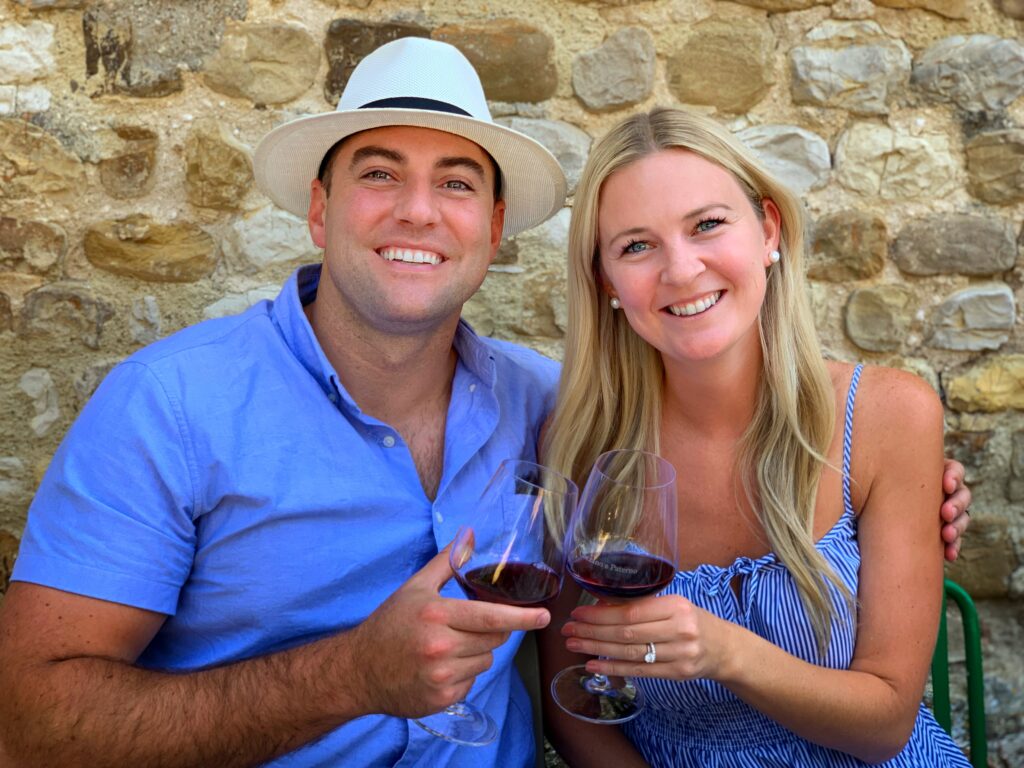
What to ask before you book (so you’re comparing apples to apples)
Use this as a quick checklist: this section alone can save you from an overpriced “premium” experience that’s premium in name only.
Question to ask: is it driver-only, host-led, or guided by a wine expert?
Why it matters: determines whether you get logistics only, or real interpretation and structure.
Question to ask: how many hours are driving vs at wineries?
Why it matters: time is the hidden cost; less driving usually means a better day.
Question to ask: Are tasting fees included? What about lunch?
Why it matters: “Included” can mean anything from snacks to a full farm-to-table meal.
Question to ask: how big is the group (really)?
Why it matters: “Small group” can still feel crowded; size changes attention and pace.
Question to ask: what’s the logic behind the winery choices?
Why it matters: curated selection is the difference between authentic access and generic stop.
Question to ask: can the pace adapt (photos, town time, questions)?
Why it matters: flexibility is often what turns a tour into a real memory.
Many tour operator are often answering to these questions to look more “premium”. Everything online looks curated, wine expert-led, small family-owned winery only etc. Flexibility, not only in term of timing is the real premiumization. Best wine tours are the one that are able to adapt to your needs, not the other way around.
Private vs group: which one should you choose?
This isn’t about status. It’s about fit.
Choose a group wine tour if:
- you want simplicity
- you’re flexible about wineries
- you enjoy meeting other travelers
- you’re happy with a set schedule
Choose a private wine tour if:
- you want the day shaped around your trip timing and pace
- your group has mixed preferences
- you want deeper storytelling or more technical explanation
- you care about quiet moments, questions, and personalization
Private doesn’t have to mean formal. The best private wine tours feel natural, like Tuscany opened a door for you. If this is what you are looking for, start to build your Private wine tours from Florence.
Region notes: what you notice in the glass
If you’re deciding between Tuscany areas, remember: it’s not just scenery. It’s style.
Chianti Classico: structured Sangiovese, savory edges, lots of variation by village and producer
Montalcino: Brunello with serious structure and clear terroir contrast across zones
Montepulciano: Vino Nobile built on Sangiovese’s local identity (often softer, with a distinctive texture), plus strong “town + countryside” energy
Bolgheri: Cabernet-led blends, coastal influence, a different Tuscan accent
Have a look to our Chianti Classico wine tour or Brunello wine tour pages.
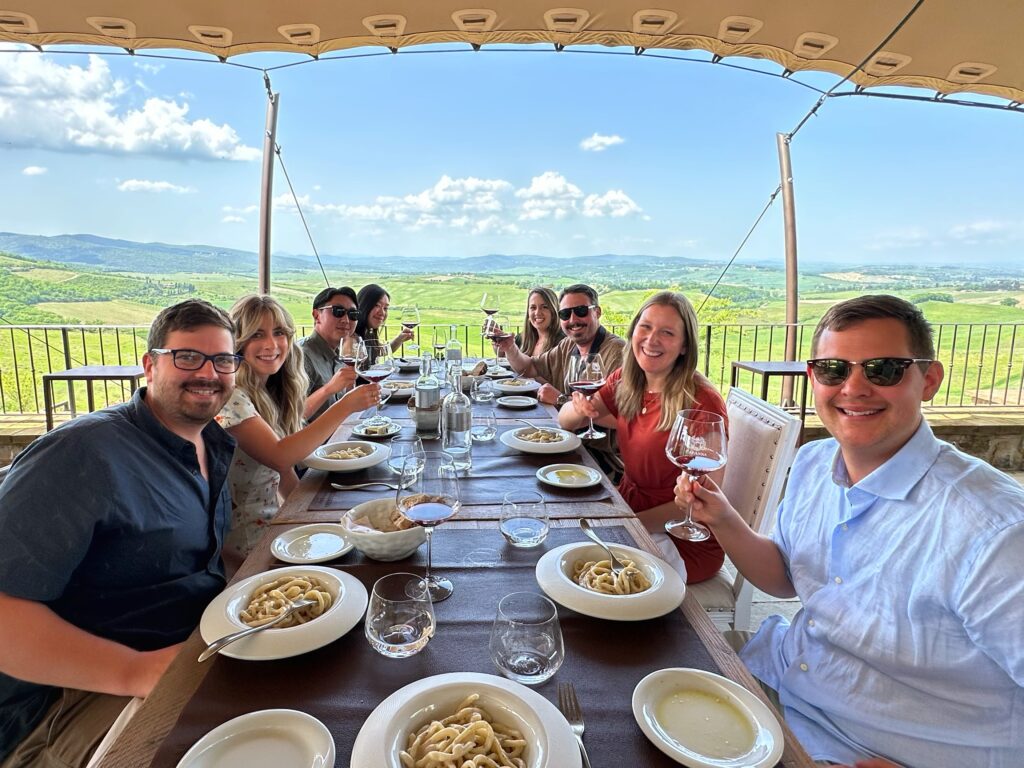
FAQs: Tuscany wine tour pricing
How much do wine tours cost in Tuscany?
Costs vary widely based on shared vs private, region distance, tasting fees, lunch, group size, and the guide’s role (driver vs educator). A cheap wine tour usually starts at €50 while a premium wine tour has around €200 as average price.
How much does wine tasting cost in Tuscany?
Winery tastings depend on number of wines, tour depth, food pairings, and prestige/access level. Always confirm what’s included (cellar access, seated tasting, pairings). If the answers are vagues, I won’t expect a premium tasting.
Why are private wine tours in Tuscany more expensive?
Because you’re paying for customization, flexibility, more complex logistics, and often higher-quality guiding and pacing.
What are common hidden costs?
Tasting fees not included, unclear lunch expectations, and long driving time that reduces time at wineries.
Final thought: choose the experience, not the headline price
A Tuscany wine tour is one of those travel days that can become a core memory, if it’s designed well.
The best approach is simple:
- start with your trip constraints (dates, pace, interests)
- choose the region that fits your story
- decide how deep you want to go (fun vs nerdy)
- choose the operator based on process, pacing, and guiding; not slogans
Quick comparison (Tuscany wine tour options)
Typical market ranges vary by season, region, group size, and what’s included (tasting fees and lunch can change totals significantly). Use this as a baseline, not a quote.
| Tour type | What it typically includes | Indicative price range (p.p.) |
|---|---|---|
| Shared group tour (standard) | Transport from Florence (or meeting point), 2 winery stops, guided tastings; lunch may be light bites or optional | €50 / €100 |
| Premium small group tour (curated) | Smaller group (often 6–8), better pacing, curated wineries, tastings often included; may include light lunch or a seated lunch depending on operator | €200 / €350 |
| Private tour (driver + winery visits) | Private vehicle, flexible schedule, curated winery bookings; depth depends on who guides; tasting fees/lunch may be included or separate | €300 / €600+ |
| Private tour (expert-led / wine educator) | Private vehicle + structured storytelling (terroir, style, production), curated producers, comparative tasting logic; often better access and pacing | €400 / €600+ |
| Collector / ultra-premium private | Benchmark estates and/or rare access, top tastings, possible older vintages, extended itinerary; typically highest demand zones | €600 / €1200+ |
If you want a helpful next read, check this article: where locals eat and drink in Florence (it’s the easiest way to avoid tourist traps and make your evenings feel as Tuscan as your wine day).
Stay in Touch
📲 Follow us on Instagram and Facebook for more wine adventures, travel tips, and exclusive experiences!
See you in Tuscany! 🍷